As we welcome the new year very soon, let’s look at how to plan a realistic skincare production timeline for 2026, from the moment you approve your sample to your first 500 units sitting on the shelf, ready to sell.
Your approved lab sample looks and feels exactly as you dreamed. Now the question is not “can we make it” but “how long will it really take to make this safely and calmly, with compliance built in”. For most indie brands, a realistic skincare production timeline from formula approval to sellable stock is around 16 to 24 weeks, not two or three.
When Your Skincare Production Timeline Really Starts
Approval is more than loving the texture in a beaker. Your skincare production timeline starts the day all of the following are final:
-
Formula at 100 percent
-
Packaging format chosen
-
Fragrance level or fragrance free status confirmed
-
Claims direction agreed
Once these are locked, your lab can start stability in the real packaging, your safety assessor can begin the file and your designer can work on your labels.
From here, think in phases rather than individual weeks. It keeps the process clearer and gives you room for small delays without crashing your launch.
Phase 1 – Locking Formula, Packaging And Paperwork (Weeks 1 to 4)
The first phase of your skincare production timeline is administrative on the surface, but it is where you prevent most delays.
During these first 2 to 3 weeks you and/or your manufacturing lab should:
-
Lock down the master formula
-
Confirm the full bill of materials for components: primary packaging, closures, labels, cartons and shippers
-
Open purchase orders with realistic lead times, including decoration
-
Lock down the manufacturing method with real temperatures, mixing speeds and order of addition
-
Prepare the lab testing samples as well as safety forms for the testing lab
- Create your account on the CPNP (EU), SCPN (UK), FDA Direct (US), etc.
Phase 2 – Stability, Preservation And Safety Inputs (Weeks 4 to 20)
Once the formula, packaging and paperwork are locked, your skincare production timeline moves into proof mode. You are checking that what looked perfect in a jar still behaves in real life.
Stability And Compatibility
Your approved sample now goes into accelerated and ambient stability testing in the final packaging. This usually runs for 12 weeks in parallel with other tasks. The chosen testing lab will track appearance, odour, colour, pH and viscosity changes over time and through different temperatures and humidity levels. Basic compatibility tests should run at the same time between the product and packaging, which is why we always test the product in its final packaging!
Preservation And Microbiology Strategy
Water containing formulas are formulated with a preservation system built-in. In order to make sure this preservative system correctly and effectively protects your product and your customers, it requires a challenge test, also known as a preservative efficacy test, that usually runs for 4-5 weeks.
Safety File Inputs
By the end of this phase, your safety assessor should already have:
-
Final formula
-
Raw material specifications
-
Manufacturing method
-
Stability and basic compatibility data to date
-
Preservative strategy and any challenge test results
-
Correct INCI and usage instructions
This means your CPSR will be close to ready by the time the testing ends.
During this time, you can prepare your label designs, order your packaging, lock-in manufacturing dates with your manufacturing launch, create your launch strategy and sales funnels, etc.
Phase 3 – Components, Pilot Fill And First Production (Weeks 16 to 22)
Now the visible side of your skincare production timeline begins – components arriving and products leaving the line.
Components And Incoming Quality Control
While stability and safety work continue, suppliers deliver bottles, jars, pumps, labels, cartons and ingredients. Each batch should be checked as it arrives. Look at counts, print quality, broken packaging, rancid ingredients, etc. This still gives you (or most likely, your manufacturing lab) enough time to re-order packaging/labels/ingredients if needed before the production starts.
Pilot Fill
Before production day, ask if your lab is willing to manufacture a pilot batch. You will be charged for it (whether there are issues or not), but you can use this batch as giveaways to bloggers and influencers as part of your marketing strategy. You should arrange for that before ordering ingredients and packaging as there needs to be enough of everything to cover this pilot batch. It is in the pilot that you/the lab confirms:
-
The ideal speed for mixing, ideal temperature for filling, etc.
-
Pump or sprayer dose and recovery over several actuations
-
Closure torque or crimp that survives drops and transport
-
Label alignment and adhesion at line speed
-
Batch coding legibility and durability
Treat the pilot as part of the real batch. The lab will keep retention samples and record all parameters, because these numbers will guide your first full run and every repeat run after that.
Production Day
If any issues arise, such as wrong mixing speed, wrong temperatures, problems with the filling machine, label material quality issues, etc. this will give you and the lab, the opportunity to discuss new approaches and solutions before the full production.
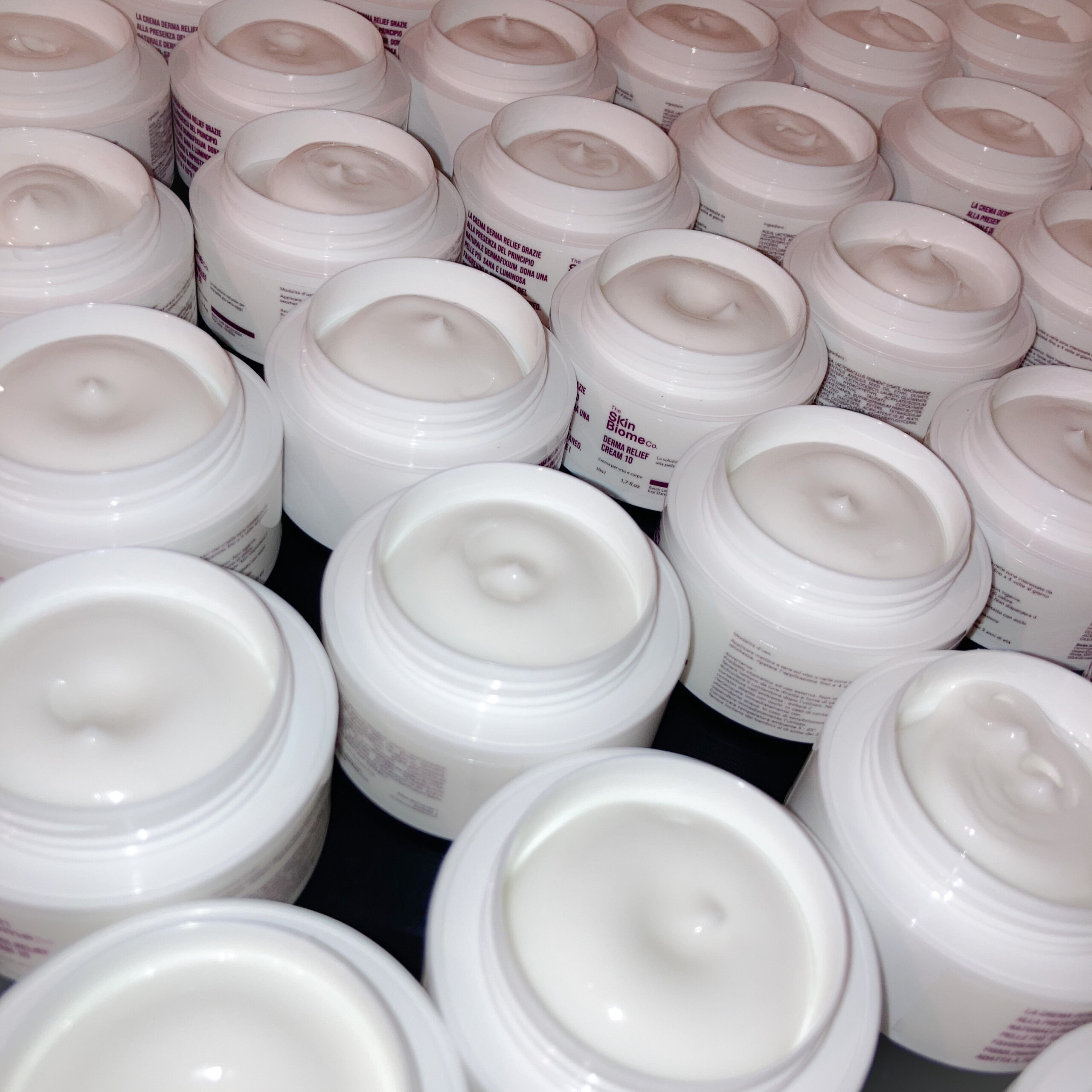
Once the pilot is successful or a successful strategy is put in place, the main fill can go ahead. A calm production day follows the validated method without improvisation. For a first skincare production, it is sensible to stay close to the line, observe the texture in real time and capture small adjustments that will make future runs smoother.
Phase 4 – QC and Shelf Readiness (Weeks 22 to 24)
After manufacture, your skincare production timeline enters its last phase: proving that the batch meets specification before filling, confirming safety, discarding non-compliant bottles after filling and getting ready to sell.
Quality Control And Release
This phase involves running a short microbiological test on the batch before and after filling, checking every bottle for correct weight, correct label placement, confirming appearance, viscosity window, fill weight, etc. Only when the batch passes its agreed specification requirements, should it be released to stock.
Product Notification
Before first sale in the EU, the UK and many other countries, the product must be notified on the CPNP (EU), SCPN (UK), etc.
Shelf Readiness And Go Live
Shelf readiness means you have more than filled bottles. You have barcoded, batch coded, cleanly labelled units in protective outer cartons or case packs. You also have finished product photography that shows the real texture and colour, and product pages that list benefits, ingredients and usage clearly.
Only when stock, compliance and communication are all ready together, has your skincare production timeline truly done its job. At that point, your first 500 units can land in your warehouse or 3PL and start moving into customers’ hands.
Common Reasons Skincare Production Timelines Slip
Even with a clear skincare production timeline, certain patterns cause most delays. The most common are:
-
Approving artwork before INCI, usage instructions and fragrance allergens are final, which leads to reprints
-
Underestimating preservation needs, especially with jars, leading to failed challenge tests or safety concerns
-
Choosing packaging that fights the chemistry: for example clear packs for light sensitive formulas or pumps that dislike your viscosity
You do not need to build huge buffers to fix this. Approve labels only when facts are final, bench a fallback preservation system early and always run stability in the actual packaging with appropriate light and temperature ranges. These small habits save weeks later.
As I leave you today
For most indie brands working with a manufacturing lab, 16 to 24 weeks from formula approval to sellable stock is both realistic and healthy. It gives you enough time to respect chemistry, compliance and logistics, while still moving fast enough to catch your market.
If you would like support in mapping your own skincare production timeline, coordinating stability and preservation, selecting packaging that behave well and preparing the technical file so your first run launches smoothly, at MB Cosmetics Lab, we can carry the technical side while you focus on storytelling and sales.
Here’s to formulas that work and brands that thrive in 2026 and beyond!
Happy New Year!
From my lab to yours,
Rose




Add comment