Let’s stir up some magic in the lab with today’s hot topic: how to build a beauty brand on a budget
Launching a beauty brand with limited resources is not about cutting corners. It is about making the few decisions that truly matter and sequencing them in a way that protects chemistry, compliance and cash flow. The founders who succeed with a small budget are the ones who choose stable formula architectures, layer in minimalist actives with purpose, invest in packaging that supports preservation and streamline testing so every euro works twice. This is the heart of budget beauty brand R&D.
Start With The Outcome, Not The Ingredient List
When founders begin with a list of trendy ingredients, they lose budget and direction quickly. A better approach is to define the customer experience first. A light gel-cream that disappears under SPF. A cleansing balm that melts makeup cleanly and rinses with no film. A curl mask that leaves a soft, conditioned finish.
Once the desired feel and purpose are clear, you can select a base architecture that consistently produces that sensory profile. The actives then become targeted additions instead of a long and expensive wishlist. This approach prevents the endless cycle of micro-prototypes that inflate R&D costs without improving performance.
The Stable Base Formula Is The Core Of Budget Beauty Brand R&D
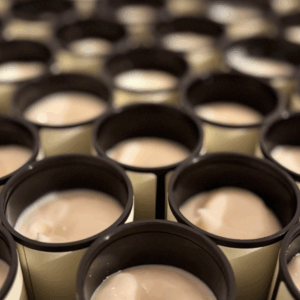
A solid base architecture behaves predictably, scales well and keeps stability on your side. If you are launching three SKUs, chances are, two can often share the same architecture. This saves not only formulation hours but also several rounds of compatibility, stability and preservation planning. When the base is intentional, you reduce risk across the entire development path.
Minimalist Actives With Maximum Impact
Many new founders assume they need a long list of actives or THE new trending active to compete. In practice, multi-active formulas complicate documentation, raise cost of goods and create unnecessary stability variables. Budget beauty brand R&D thrives on minimalism with intention.
Choose one hero active with strong evidence. Support it with one or two materials that elevate performance or sensorials. Your claims then read clearly because each benefit connects to real evidence and a meaningful percentage, rather than a cluttered INCI list.
Preservation That Works In Real Bathrooms
Nothing drains a budget like a failed challenge test. Preservation must be designed at bench from day one, not patched at the end. Furthermore, all natural preservatives are not broad spectrum and no preservative will fit all of your formulas, so you might need to have a couple choices on hand depending on formula structure. You can’t choose the mildest preservative just because you feel it’s more natural, as you might risk the safety of your entire batch and your customers and that will cost much more to re-do. As you can see, preservation is a thoughtful, intentional process as much as a scientific one.
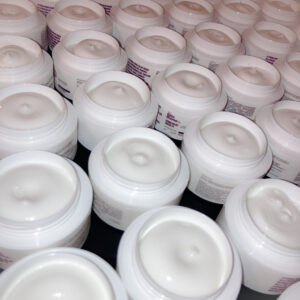
If your brand leans into jars for sensorial reasons, offset the risk with strong communication and a preservation system that expects repeated contact. If your audience includes sensitive skin, an airless packaging often becomes the most economical long-term choice because it reduces contamination, reduces preservative stress and cuts down on future reformulations.
Packaging That Protects Your Formula And Your Budget
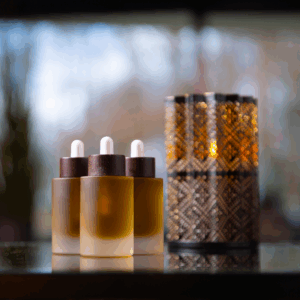
Packaging is chemistry and budget, not an afterthought. Airless bottles protect oxidation-sensitive formulas, limit contamination and improve dosing. Flip-top closures outperform wide-mouth jars in bathrooms where water and steam are constant. Clear packaging looks beautiful online, but light-sensitive systems will suffer, so save your budget by selecting elegant opaque or tinted components when needed.
Harmonising components across SKUs is also one of the easiest ways to control cost. A shared bottle for cleansers, toners, shampoos, body creams. One airless system for moisturisers and serums. A single dieline for all cartons. These small harmonisations reduce MOQs, simplify logistics and stabilise costs.
Private Label, Custom Or Hybrid: The Smart Budget Choice
Private label
Ready-made formulas created and owned by the lab. Scent is customisable. Fastest and most budget-friendly option.
Custom formula
A completely new formula developed from scratch for one brand. Full control over texture, ingredients and claims. Higher investment and longer timeline.
Hybrid model
A mix of both. Use private label for some products and only invest in one custom formulation for specific SKUs.
Budget does not always equal private label. Custom does not always equal expensive. Many of the strongest indie launches use a hybrid strategy: Place supporting SKUs on private label validated formulas. Invest your custom spend on one signature formula that becomes your brand’s anchor.
As I end this article for the week, let me leave you with my final thoughts: The Courage To Stay Focused
The most powerful tool for a budget-conscious founder is restraint. Not giving in to the myriad of brilliant and creative ideas flowing your mind! Focus creates clarity, speed and stronger formulas.
If you want support, my team can help you select private label formulas, build strong custom formulas matching your brand’s ethos, leading the regulatory process and even manufacture your products in low MOQs. All you have to do is reach out today and be on your way to creating your very own cosmetic brand!
Here is to formulas that work and brands that thrive!
From my lab to yours,
Rose


Add comment